
Guides
Part of Which activities actually trigger a federal license requirement
Licensing questions: eight facts to gather before you call an agency
What to write down before you call a licensing agency: the eight facts, how to match their categories, the six fields to record after, and when to rerun the sheet.
What to take away
- Eight facts belong on the page before you call. An agency answers the description you give, not the business you run.
- Composition with origin, and volume in the agency's own units, decide most answers. Take both from records.
- Two or three candidate categories beat one confident conclusion about your own status.
- Record six fields after the call, including the event that would make the answer stale.
- Re-run the whole sheet on any of seven triggers, from a new material to a new carrier.
The eight facts to write down before you call
Work through all eight and write a real answer for each. A blank line is where the call stalls. The federal licenses overview explains which of these facts turn a question into a requirement.
- What the item is, in physical termswhat it is made of, what it does, who handles it.
- Composition and origin of every input, taken from the supplier's specification sheet.
- Volume in the agency's units, annual and per shipment.
- Who holds the item at each stage, since duties can attach to a named person.
- Every state line and national border crossed, with the date of the most recent shipment.
- Premises and transportaddress, zoning, vehicle type.
- Claims on the label and the website, read literally, because a claim can move a product into another regime.
- The change that raised the question, with its date.
Facts Before You Call
- The thing itselfmaterial, origin, hazards
- Quantity and units you actually measure
- Origin and destination, border crossings
- How it movesvehicles, carrier responsibility
- Where it restsstorage and quantities
- Who handles itemployees and contractors
- What you emitdischarge, byproduct, waste
- What you claimlabels and marketing words
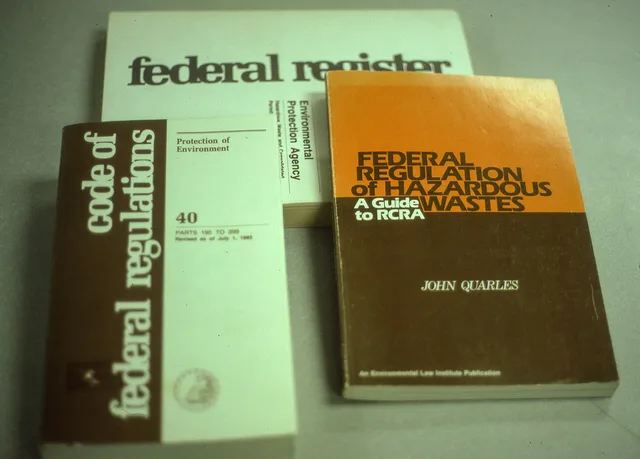
Records beat memory. An answer built on a wrong volume or a mistaken origin is worth nothing, and no office will audit your description for you. Rule text carries a currency date, and the reader aid to the Code of Federal Regulations shows how to read that date before you treat a rule as current.
Match your words to the agency's categories
Spend ten minutes on the agency's definitions page first. Try to place your description inside its categories instead of arriving with a verdict. The federal licenses guide sets out the order in which to read those definitions.
Aim for two or three category names that might apply, then ask a narrow question: is this inside your definition of X, or outside it? Say plainly when you sit near a boundary, because admitting uncertainty beats a confident description that assumes the answer.
Deciding which agencies to call comes before any of that. The federal guide to licenses and permits sorts by activity and by level of government, then hands you to the issuing body.
Example: a description an agency can answer against
Written before the call: "Shelf-stable cookies, baked in a home kitchen in Florida, sold on our own website and shipped to customers in 14 states, labeled with no health claims and no refrigeration required."
That hands over a product, a process, a state of origin, a distribution pattern and a claim position. "We sell baked goods online" hands over none of them, so the agency is left guessing at volume, storage and claims.
Florida's cottage food rules set out which foods qualify for an exemption and which do not, so the cottage food page is worth reading against your own description first.
What to record after the call
Write six fields the same day, while the wording is fresh. The license fundamentals register takes one row per office contacted, whether or not a requirement came out of it.
Field / What goes in it
- Office and unit
- The specific desk you spoke to, not just the department
- Date and method
- The day of the call, and whether you asked in writing
- Description given
- The eight-fact description you actually read out
- Answer in their words
- Quoted, not summarized into your own terms
- The fact it turned on
- The single detail that decided the answer
- Trigger event
- The change that would make the answer stale
A recorded "nothing at our level for this activity" is worth as much as a requirement, and only if you can find it again. File it with your permits rather than in an inbox.
When to re-run the whole checklist
Re-run the full sheet rather than editing the last line. Every trigger below changes a fact the previous answer rested on.
- A new product or service line
- A new material, ingredient or component, or a new supplier for an existing one
- A new state, province or country in the distribution route
- A new claim on packaging, a website or advertising
- A new carrier, vehicle type or crossing point
- New premises, including a move inside the same city
- A new owner, partner or named responsible person
When to Re-run the Sheet
- Add or change a product, material, or supplier
- Start shipping yourself or switch to a carrier
- Begin importing or selling outside the country
- Add a vehicle of a different size or type
- Store more of something or somewhere new
- Change what labels or marketing claim
- Begin holding customer funds before passing on
Nothing at any level will call to tell you a trigger fired. State and local layers need their own re-check, which is why compliance calendars keeps triggers and dates as separate entries.
Common questions
What if I do not know which agency to call first?
Start from the most distinctive noun in your description: the material, the signal, the border crossing. Ask that regulator who else usually has an interest. Referrals between agencies are routine.
Do I have to give my business name to ask a question?
Public inquiry lines generally answer a described scenario. Naming yourself makes the record easier to keep and rarely costs anything. The description is what the answer depends on.
Is a written answer better than a phone call?
For anything consequential, yes, and it is worth asking whether the office will confirm in writing. Note down what you were told the same day either way.